THE CITY'S MEMORY

The water history of Erzurum

Water descending from the foothills of Palandöken through clay pipe lines shaped a city's culture of charity for four centuries. This page tells that story period by period.

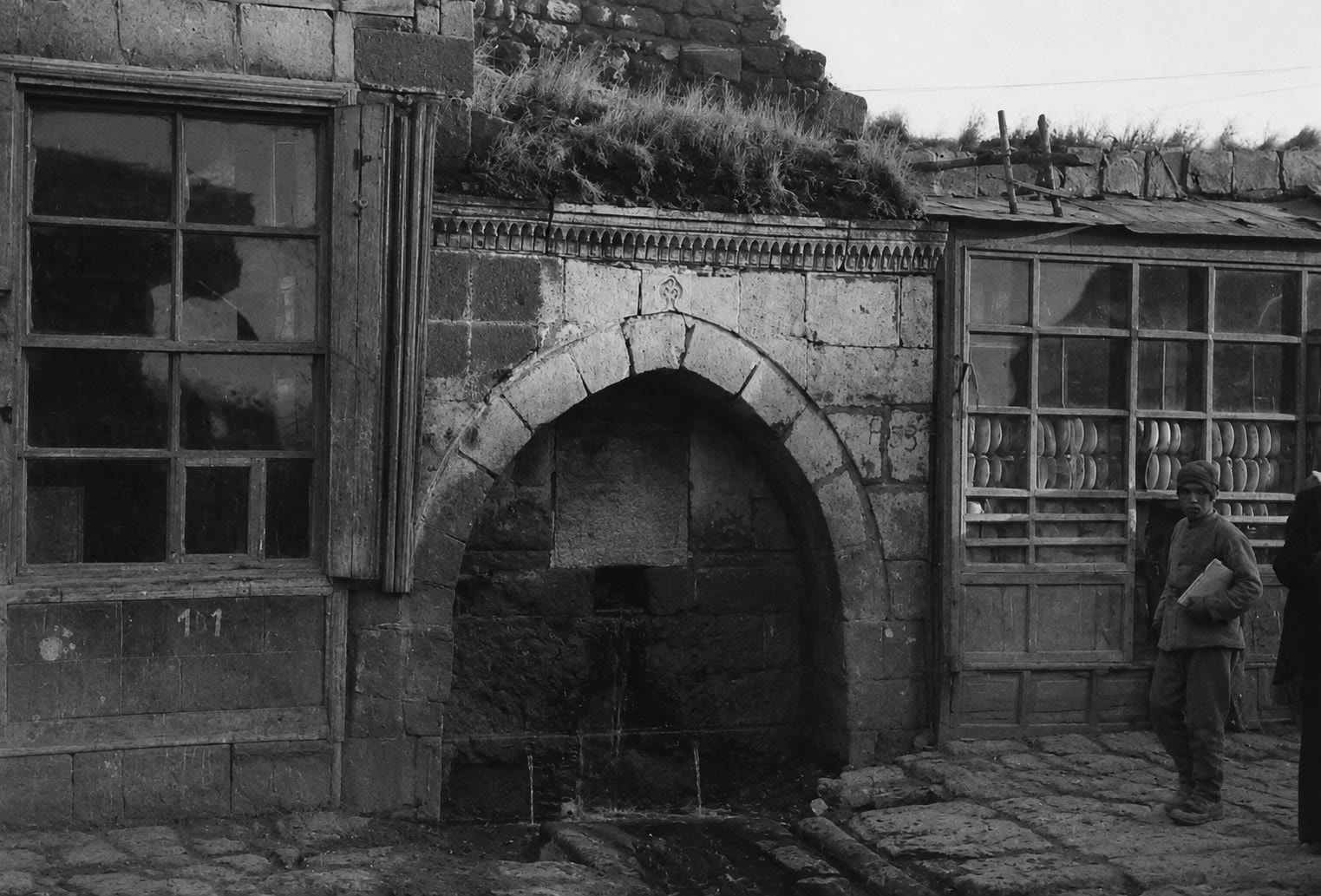
Şabahane (Şafiiler Mosque) Fountain, historic archive photograph

Period 1 of 7

3.271 m

Geography

The plateau and its springs

In a city of hard winters, water was life itself.

Founded as a high plateau settlement in the foothills of the Palandöken Mountains in north-eastern Anatolia, Erzurum has always been marked by its harsh climate and continental character. In this demanding geography water was the most basic and vital element in building a civilisation and making it last. Cold, clear springs that fogged the glass even in summer were spoken of locally as âb-ı hayat, the water of life, and âb-ı zülal, crystal water.
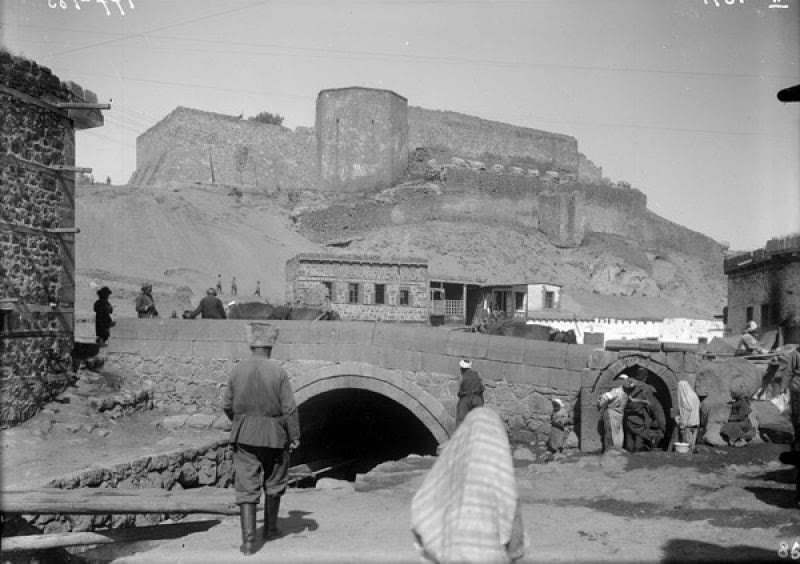
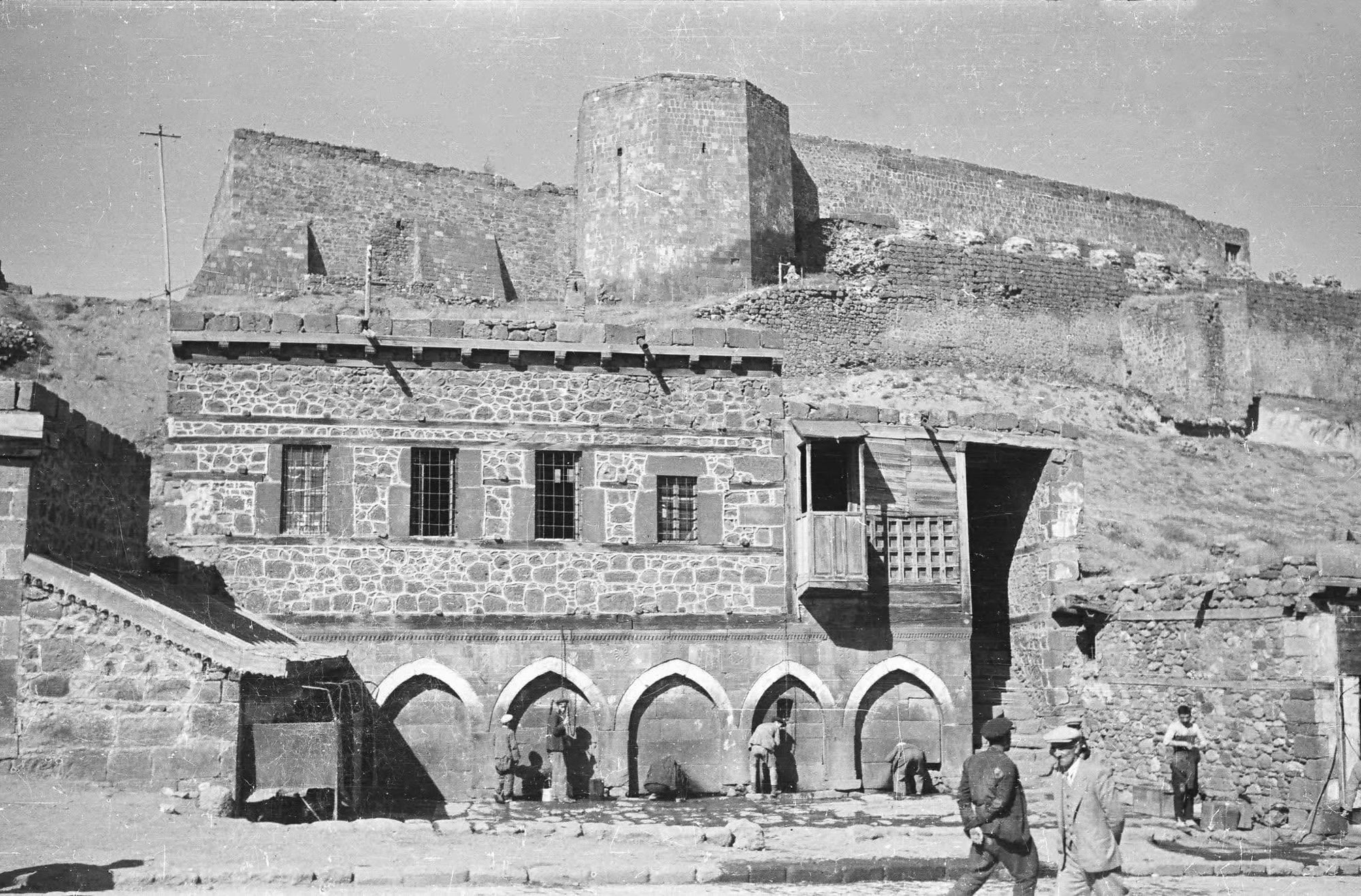
Dabakhane Fountain, historic archive photograph

Period 2 of 7

Künk

Tradition

From clay pipe to neighbourhood

Water reached the city not by state decree but through private charity.

Water was drawn from natural springs in the foothills and carried to the neighbourhoods and fountains through earthenware or stone pipes. Closed pipe systems were preferred so that the water was protected from outside contamination. Unlike the imperial public works of the capital, Erzurum's fountains were built entirely through the charity of benefactors and administrators. The city's tradition of water structures and fountains runs unbroken from the Anatolian Seljuk period to the final phases of the Ottoman era.

Fountains of this period

Şabahane (Şafiiler Mosque) Fountain, historic archive photograph

Period 3 of 7

1556

The 1500s

The oldest work still standing with its inscription

A single signature surviving from the age of Süleyman the Magnificent.

According to its inscription, the Şabahane Fountain was built in 1556, during the reign of Süleyman the Magnificent, by a man named Yakup. It is the oldest Ottoman work in Erzurum to have reached us with its inscription intact. Its water is said locally to help eye and kidney ailments; the spring emerges just below the castle and reaches the fountains over a very short course.

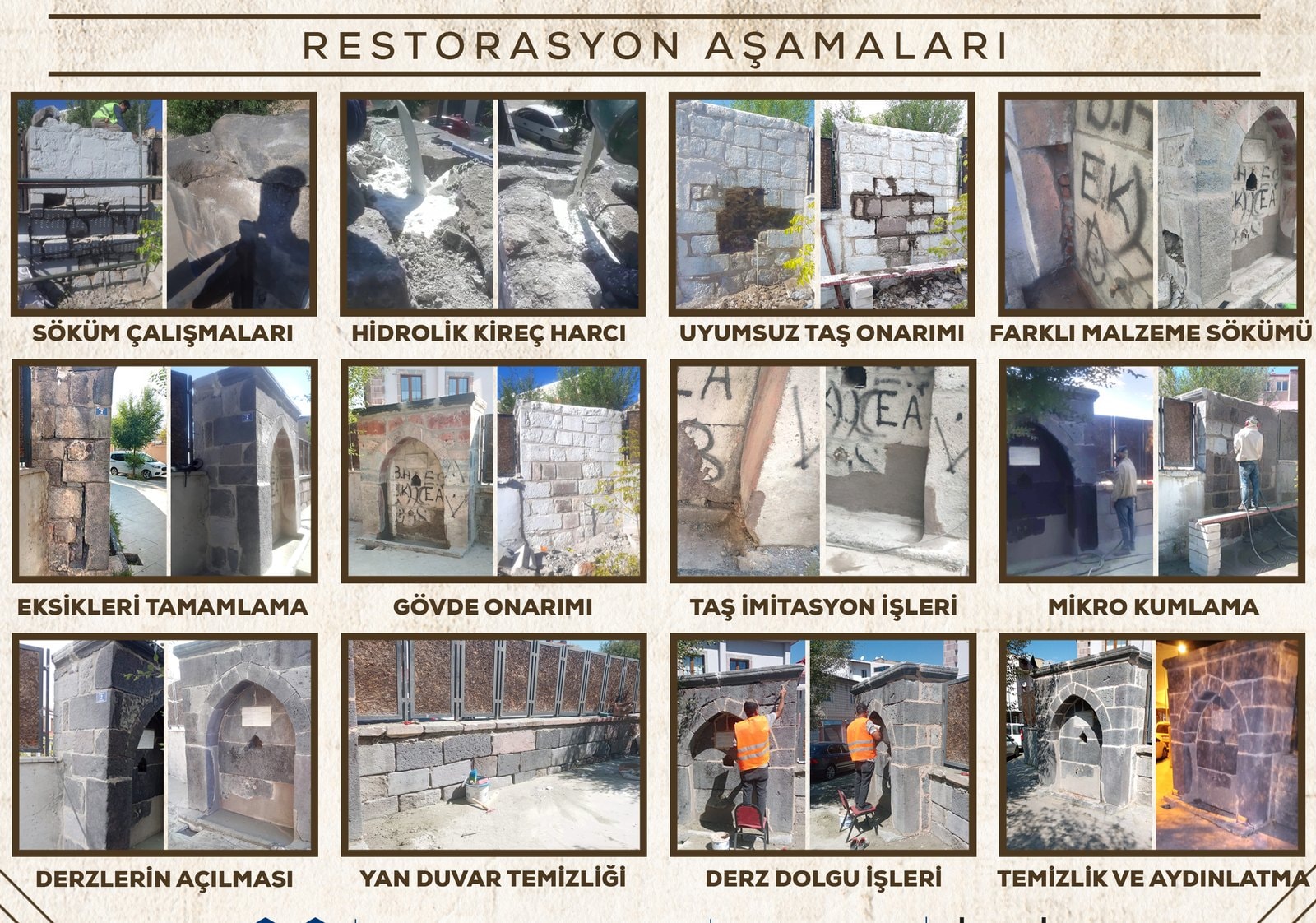
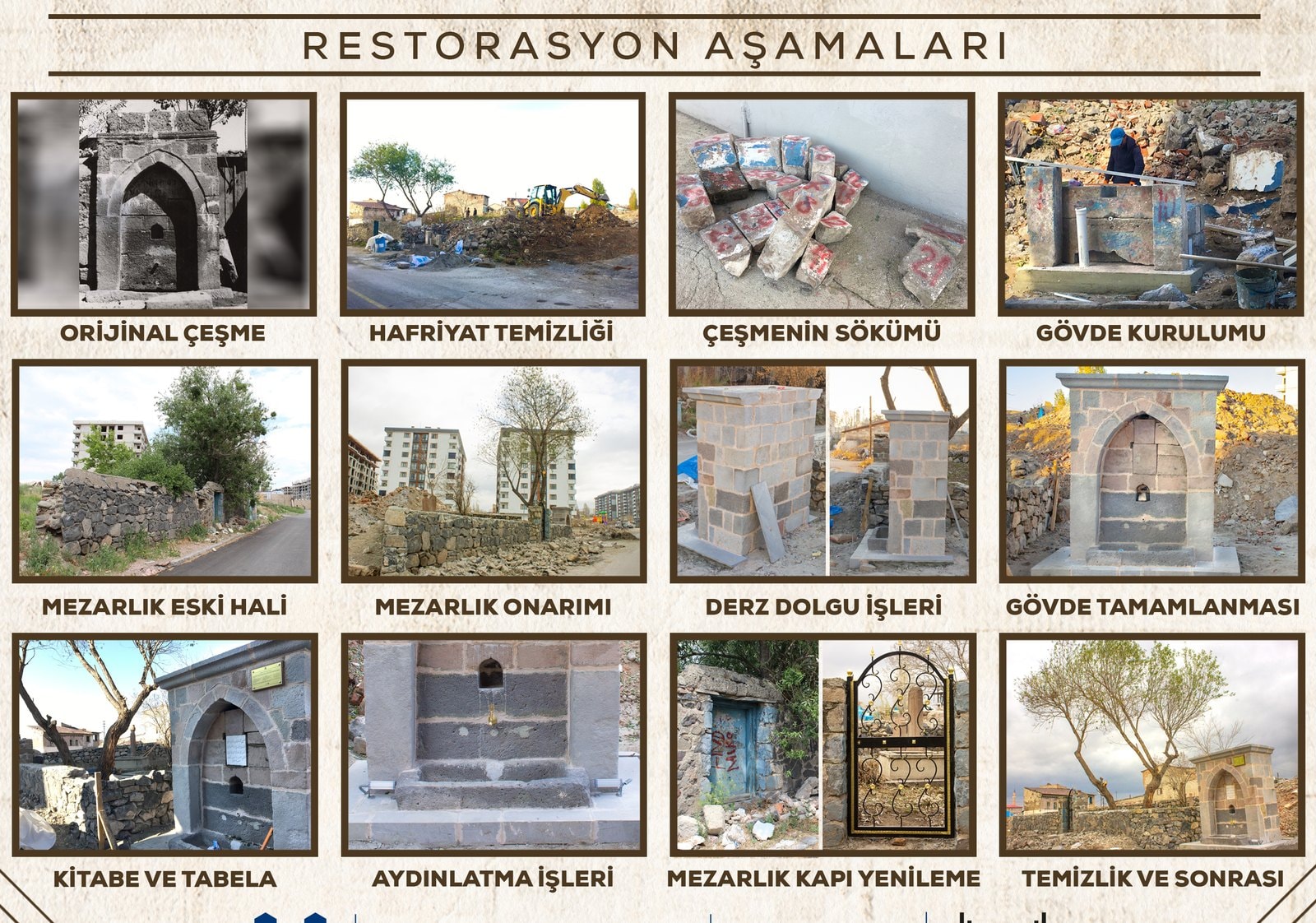
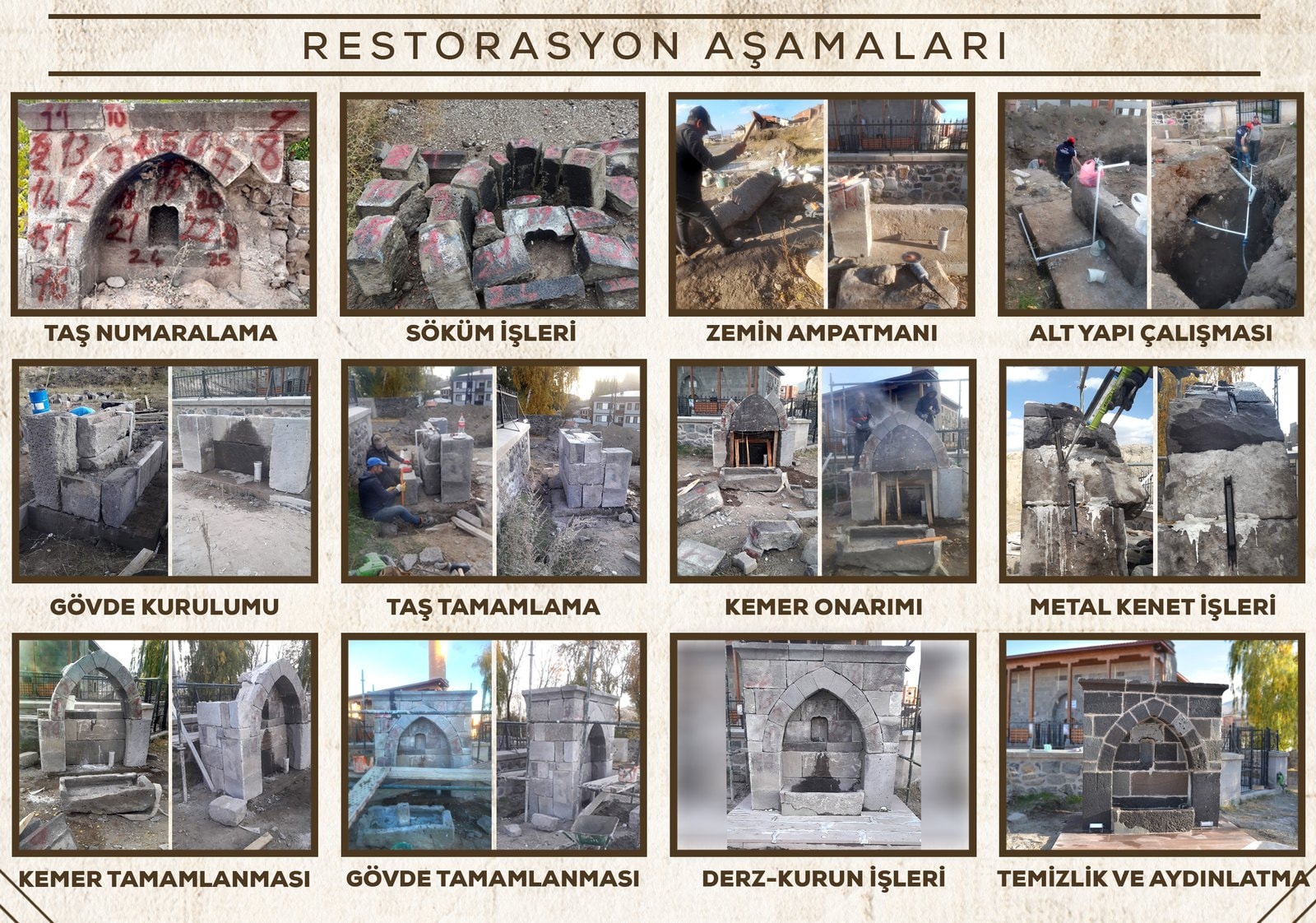
Step-by-step photographs of the restoration of Hacı Cuma Mosque Fountain

Period 4 of 7

1600'ler

The 1600s

The fountain rises with the mosque

Cleanliness was the first condition of worship; the fountain stood beside the sanctuary.

The great importance Islam attaches to water, and the requirement of cleanliness before worship, brought Erzurum's water architecture and its culture of charity to their height. In this century the fountain usually rose as part of the same endowment as the mosque. The endowment record of the Hacı Cuma Mosque, dated AH 1040 / AD 1630, carries the fountain's age back to the 17th century, and the Mehmet Kethûda Fountain is thought to have been built in AH 1058 / AD 1648, the year the Gürcü Mehmet Paşa Mosque was erected.

Step-by-step photographs of the restoration of Çeteci Abdullah Paşa Fountain

Period 5 of 7

1700'ler

The 1700s

The height of the city's water works

One governor's name is cut into half the fountains of the city.

The era of Çeteci Abdullah Paşa, foremost among the benefactors who commissioned water structures and fountains in Erzurum, is one of the high points of the city's water works. The fountains were built both against walls and free-standing, richly worked in stone. In the same century Hacı Mehmet Ağa built his fountain at Gürcükapı with a ten-line endowment inscription in thuluth script across its pediment, and endowed many shops and inn rooms so that his charitable works would endure.

Step-by-step photographs of the restoration of Hüseyin Ağa Fountain

Period 6 of 7

1800'ler

The 1800s

A fountain on every corner

The patrons were no longer pashas but the neighbourhood's own benefactors.

In this century the fountain became common property of the neighbourhood. Cafer Ağa built his in 1802; Hüseyin Ağa rebuilt his and restored its flow in 1823, and lies buried in the cemetery behind it. The fountain built by Gülahmet Ağa early in the century is known locally as the Camels' Fountain. Hacı Dede Ağa built one fountain in 1868 and another towards the end of the century.

Gürcükapı Hacı Mehmet Fountain, historic archive photograph

Period 7 of 7

Today

Republican era

Finding the lost springs again

Historic pipe lines were traced anew and the fountains ran again.

The fountains revived by the municipality in the Republican era are those where historic pipe lines and lost springs were traced again and reconnected to the city supply and to their original sources, so that the surviving cultural heritage could be preserved and passed on. With close to two hundred historic fountains, Erzurum today has the character of an open-air museum, and stands as the most tangible living proof of a deep-rooted civilisation built jointly by water and by faith.

Blending the difficulties of its harsh climate with faith, learning and a sense of beauty, Erzurum built a singular hearth of civilisation in Anatolia. With its mosques, its madrasas, its baths and the graceful fountains that hold every street corner, it did more than make this land a homeland: by giving spirit to stone and to water it set the lasting seal of Turkish-Islamic city planning upon it.

Erzurum, the city of âb-ı hayat and âb-ı zülal…The Water History and Water Structures of the City of Erzurum

INVENTORY

The standing witnesses of this history